

Before you make it · No. 22
Overnight shokupan, or the same day
Does the dough spend the night in the fridge, or only the yudane? Four named recipes make the pan, the lid, and the slice clear before you shop.
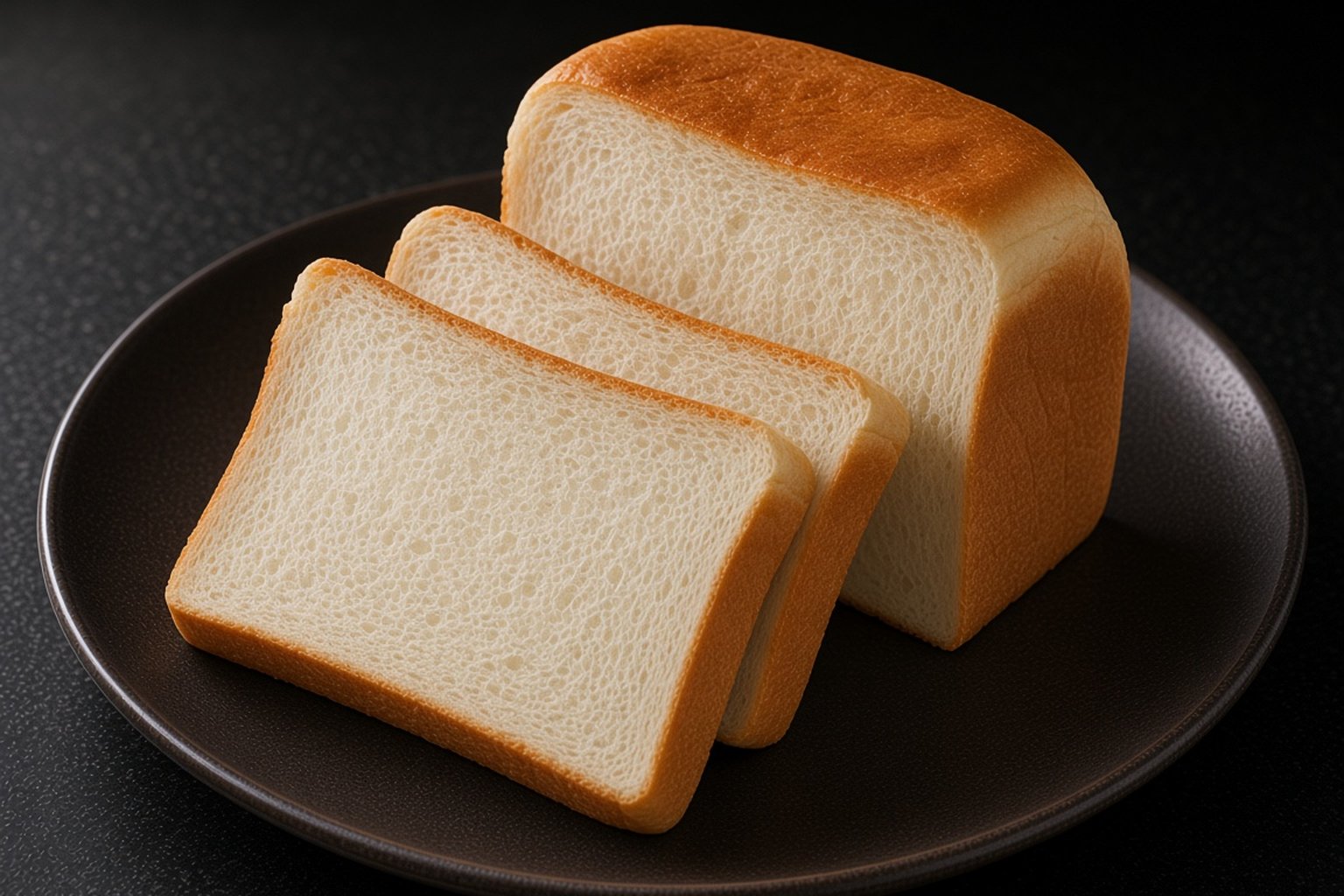
If you want the dough in the fridge overnight, follow Dini Kodippili. She prefers that proof, and her card gives about 12 hours. Andrew Janjigian also refrigerates the dough before shaping, at least 2 hours and up to 24. On his page the overnight stretch is optional. The chill is the part he calls essential.
Shihoko Ura’s overnight is the yudane. Her card says to mix the flour and boiling water the night before and refrigerate that paste. The dough rises the next day. Namiko Hirasawa Chen’s method is the same day, with no yudane and no tangzhong. On August 28, 2026, Naomi at Just One Cookbook replied under Chen’s recipe that the shaped pan can be covered and refrigerated overnight, then brought out for about 45 to 60 minutes until the dough is about 90% of the pan height. That clock is the reply.
The pans are four different vessels. Chen uses a lidded Japanese shokupan pan in the 1.5 kin size. Lid on is her flat top. Open is her round top. Janjigian’s written loaf is open, in a 9- by 4- by 4-inch pan, and a note tells you when he uses less dough for a lid. Kodippili butters one 4.5- by 8.5-inch loaf pan. Her method has no lid. Ura’s tin is 3.9 by 7.9 by 3.5 inches. Her method has no lid.
The slice waits on a different clock on each page. Chen cools the loaf 2 to 3 hours. Janjigian leaves it 5 minutes in the pan, then at least 1 hour on a rack. Kodippili says it is easier to cut at room temperature, and that warm is still welcome. She wants it out of the pan after a few minutes. Ura slices the next day. Follow one page all the way through.
At a glance
How each recipe fits this plan
- No image yet
Nami
Same-day method in a lidded 1.5 kin shokupan pan, with no tangzhong and no yudane. Cool 2 to 3 hours before slicing. A reply on the page, not the card, puts the shaped pan in the fridge overnight.
Plan around this Overnight is a reply Recipe by Namiko Hirasawa Chen, Just One Cookbook - No image yet
Andrew Janjigian
Chill the dough at least 2 hours and up to 24 before shaping. Overnight is optional. The written loaf is open, in a 9- by 4- by 4-inch pan. Cool at least 1 hour on a rack.
Fits your plan Chill is essential Recipe by Andrew Janjigian, Serious Eats - No image yet
Dini Kodippili
Tangzhong, and a dough proof she prefers to leave overnight. The card’s alternative is about 12 hours in the fridge. The pan is 4.5 by 8.5 inches, with no lid in the method.
Fits your plan Prefers overnight dough Recipe by Dini Kodippili, The Flavor Bender - No image yet
Shihoko Ura
The yudane is the overnight piece, refrigerated on the card. The dough rises the same day in a 3.9 by 7.9 by 3.5 inch tin. She slices the loaf the next day.
Plan around this Yudane overnight Recipe by Shihoko Ura, Chopstick Chronicles
Nami
Plan around thisOvernight is a replyFrom Shokupan (Japanese Milk Bread) by Namiko Hirasawa Chen, Just One Cookbook. Published May 17, 2026.
- Card total
- 4 hours
- Pan
- 1.5 kin, with lid
- Preferment
- None
- Slice
- After 2–3 hours
Andrew Janjigian
Fits your planChill is essentialFrom Shokupan (Japanese Milk Bread) by Andrew Janjigian, Serious Eats. Updated January 26, 2026.
- Card total
- 6 hr 50 min
- Pan
- 9 × 4 × 4 in, open
- Fridge dough
- 2–24 hours
- Slice
- At least 1 hour
Dini Kodippili
Fits your planPrefers overnight doughFrom Japanese Milk Bread Recipe (Hokkaido Milk Bread) by Dini Kodippili, The Flavor Bender. Updated July 1, 2020.
- Card total
- 5 hr 25 min
- Pan
- 4.5 × 8.5 in
- Fridge dough
- About 12 hours
- Slice
- Easier at room temp
Shihoko Ura
Plan around thisYudane overnightFrom Shokupan (Japanese Milk Bread Loaf) by Shihoko Ura, Chopstick Chronicles. Published May 19, 2020; updated August 5, 2020.
- Card total
- 2 hr 30 min
- Pan
- 3.9 × 7.9 × 3.5 in
- Overnight
- The yudane
- Slice
- The next day
Where the four cooks disagree
Follow one cook’s page all the way through. The pan, the preferment, and the overnight rest are not interchangeable.
| Cook | Pan | Preferment | Overnight | Slice | Bake |
|---|---|---|---|---|---|
| Chen, Just One Cookbook | Lidded 1.5 kin shokupan pan. Lid on for a flat top, proofed to 75–80% of the pan. Open for a round top, proofed to 85–90%. | None. She bakes without tangzhong or yudane. | Not on the card. A reply describes the shaped pan overnight. | After 2–3 hours. | Preheat 425°F. Lid on, 410°F for 25–30 minutes. Open, 385°F for 25–30 minutes. |
| Janjigian, Serious Eats | 9- by 4- by 4-inch pan, written as an open loaf. A note drops each piece to 200 g for a covered pullman or a smaller flared pan. | A pour-over of boiling milk on sweet rice flour. He sets it beside yudane, and apart from a stovetop tangzhong. | The dough, at least 2 hours and up to 24, before shaping. Overnight is optional. The chill is essential. | 5 minutes in the pan, then at least 1 hour on a rack. | The open loaf: 300°F for 50–60 minutes, to at least 195°F inside. |
| Kodippili, The Flavor Bender | One 4.5- by 8.5-inch loaf pan. The method has no lid. She also gives an 8- or 9-inch square pan for rolls. | Tangzhong, 5 parts liquid to 1 part flour, cooled to room temperature. | The dough. She prefers overnight. The card’s alternative is about 12 hours in the fridge. | Easier at room temperature. Warm is also on the page. Take it out of the pan after a few minutes. | 350°F for 30–35 minutes. About 190°F in the essay. About 190–205°F on the card. |
| Ura, Chopstick Chronicles | 3.9 by 7.9 by 3.5 inches. The method has no lid. | Yudane. Her table is 50 g bread flour and 40 ml boiling water, above 194°F. She says the usual ratio is 1:1, and that 1:08 is easier for her. | The yudane, refrigerated overnight on the card. The dough rises the same day. | The next day. She bakes on Saturday and slices on Sunday. | 365°F for 25–30 minutes. |
A few details that change the night, and the crumb:
- Overnight is a different stage on each page. Kodippili’s fridge proof is before shaping. Her shaped pan then proofs again in a warm place, about 1 to 2 hours, until the dough is just under the rim. Janjigian chills before shaping, until the dough is at least 55°F, then proofs the pan at 75 to 80°F for 1 to 2 hours, until the top is 1/2 inch below the lip. Chen’s reply is the shaped pan itself, overnight, then about 45 to 60 minutes out. On the method, the dough goes in the fridge for 15 minutes only when it is too warm after kneading. Ura’s dough does not go in the fridge. Her first rise is 45 to 60 minutes around 86°F, then 20 minutes on the bench, then about 30 minutes in the tin.
- Kodippili prints three dough clocks, and they are not one number. The essay says you can skip the warm first proof and proof overnight instead. The card says a warm proof of about 1 to 2 hours, then an optional couple of hours in the fridge, and, alternatively, about 12 hours in the fridge. A hand-kneading note says overnight in the fridge, or a warm place until doubled. Her card total is 5 hours 25 minutes, with 4 hours of proofing. The 12-hour line sits outside that total.
- Janjigian’s card total is 6 hours 50 minutes. The 24-hour end of his chill does not fit inside it. His note says the overnight cold proof is optional and that the chill before shaping is essential. For a lid, the timed method is under the flared-pan sentence: proof to 1/2 inch above the lip, bake covered 30 minutes, then 20 to 30 minutes more, still to at least 195°F. The covered 9- by 4- by 4-inch pullman is named in the sentence about 200 g pieces. That sentence does not repeat the minutes.
- Ura’s yudane clocks sit side by side. The walkthrough says 8 to 12 hours. The card’s resting field says 8 hours, and the total of 2 hours 30 minutes leaves that rest out. She says so. The card says refrigerate overnight. The essay also says the cooled paste can wait on the bench or in the fridge. Her FAQ says a couple of hours in the fridge has worked, and that a longer rest makes better bread. A reader asked about a Pullman lid and the bake time. Her reply does not give a time.
- Chen’s card total is 4 hours: 1 hour prep, 30 minutes cook, 2 hours 30 minutes proof. The method prints a first rise of 45 to 60 minutes, up to 1.5 hours in a cool kitchen, a 15-minute bench rest, and a final proof of about 1 hour. The overview’s bake line is 385–425°F. The method splits that into 410°F with the lid and 385°F open, after a 425°F preheat. If the flat-top dough is already past 80% of the pan, she says to bake it open, because the lid may stick. She also says many Pullman pans sold in the US are smaller than her 1.5 kin pan, and she points a smaller pan at an earlier recipe for 10% less dough. The amounts on that earlier recipe are not repeated here.
- The piece count changes the fill. Chen divides into 3 logs. Janjigian’s open loaf is 3 pieces, about 225 g each. Kodippili’s loaf is 4 rolls. Ura uses 2.
- The baked loaf is a different question from the dough. Chen stores the cooled loaf in a bag in a cool place for 1 to 2 days, and says not to refrigerate it, because cold air dries the bread. Beyond that she slices and freezes, up to a month, best within 2 weeks. Ura leaves the loaf on the bench for a few days, and freezes slices for about a month. Janjigian freezes the loaf up to 3 months. Kodippili’s page gives no day count for the baked loaf. Her tangzhong can wait in the fridge. She gives no length for that wait, and she wants it back at room temperature before it goes into the dough.
Chen names fruit sando as one use for the loaf, with egg sando and katsu sando. Ura names a fruit sando with strawberries and cream. The sandwich timing is on Strawberry sando today or tomorrow.
Raw egg in two of the doughs
Janjigian’s dough includes an egg yolk. Kodippili’s includes a whole egg. Chen’s dough list has no egg. Ura’s dough list has no egg. The warm proofs above are the clocks those cooks printed. They are not a safety test.
The USDA’s Shell Eggs from Farm to Table page says to store eggs in the refrigerator at 40°F or below, and “Don’t keep eggs out of the refrigerator more than 2 hours.” It also says: “Cook dishes containing raw eggs immediately or refrigerate and cook within 24 hours.” The same list says to cook casseroles and other dishes containing eggs to 160°F. That is general egg guidance, last updated November 20, 2024, checked November 10, 2026. It is not a clearance for a warm proof, a 12-hour dough, or a baked loaf, and it does not set the crumb temperature on these bread pages. Open the link before you rely on it.
“Cool completely for 2–3 hours before slicing.”
Namiko Hirasawa Chen, Just One Cookbook
“The overnight cold proof is optional, but adds flavor and convenience. Either way, chilling the dough before shaping makes the otherwise sticky dough easier to handle and is essential.”
Andrew Janjigian, Serious Eats
“I prefer to do an overnight proofing because a chilled dough is much easier to handle than the soft, room temperature dough.”
Dini Kodippili, The Flavor Bender
“This bread is super soft, so it is better to slice it the following day.”
Shihoko Ura, Chopstick Chronicles