

Before you make it · No. 15
Hotteok for tonight
One rise, then another, then the pan? We read four named recipes so you can see what the dough, the seal, and the heat ask of you before you start.
Say you might make cinnamon hotteok tonight. You cook occasionally, you have a pan, and a short film is what sent you looking. You want to know whether the dough will be ready in the time you have, and what the filling does if the seal fails.
We read four named recipes and pulled out the rise, the seal, and the heat each cook prints. We haven't cooked these versions. Everything practical below comes from the named page and is linked, so you can check it. Cook from the recipe you choose. This page stays with the sweet cinnamon filling. It does not mix the four doughs into a new one.
At a glance
How each recipe fits this plan
- No image yet
Maangchi
One hour at room temperature, then another 10 to 20 minutes. The pan starts at medium heat and finishes very low, covered, for one minute. The method ends with serve hot. The article gives no storage time.
Plan around this Work after the rise Recipe by Maangchi - No image yet
Hyosun
The card totals 1 hour 20 minutes. The directions say about an hour or longer, then 20 to 30 minutes or longer, and about 10 minutes first if the yeast is active dry. The card also prints 50 minutes with no label.
Plan around this Read past the card Recipe by Hyosun, Korean Bapsang - No image yet
Holly Ford
The card totals 1 hour 30 minutes, with 1 hour of resting. The method says rise until doubled, about 1 to 2 hours. Seal completely, press to about 1/2 inch, and lower the heat if the outside browns too fast.
Plan around this Seal before you press Recipe by Hyegyoung K. Ford (“Holly”), Beyond Kimchee - No image yet
샤인
The header says within 120 minutes. The steps name a 10-minute yeast rest and a 40-minute room-temperature rest, then a later one-hour photo and another degassing. She says winter fermentation often fails. The header is not a deadline.
Risky for this plan Clock is unresolved Recipe by 샤인 (“Shine”)
Maangchi
Plan around thisWork after the riseFrom Sweet pancakes with brown sugar syrup filling (Hotteok) by Maangchi. Posted March 18, 2010; updated March 26, 2023.
- First rise
- 1 hour, covered
- Second rise
- 10–20 min
- Pan
- Medium, then very low
- After cooking
- Serve hot
Maangchi's method gives the rise in two stages, and neither stage is a start-to-table time. The dough sits with the lid closed at room temperature for 1 hour. After that hour she says it will have doubled. Knead out the gas, then let it rise another 10 to 20 minutes. One hour plus 10 to 20 minutes is 70 to 80 minutes of rising. That sum is arithmetic from the two stages. She does not print it as a total. The card says the recipe makes 8 hotteok. It does not say how long the batch spends in the pan.
The dough in this method is all-purpose flour. The filling she prints for the method is turbinado sugar or brown sugar, cinnamon powder, and chopped walnuts, put in the center and sealed. She says to use flour from the board so your fingers do not stick. On the pan, use a nonstick pan over “medium heat” with some vegetable oil. She cooks one ball 30 seconds, turns it when the bottom is light golden brown, and presses it into a thin wide circle, which she describes as about the size of a CD. About 1 minute more, until that side is golden brown, then turn it and “turn down the heat very low.” Lid on, 1 more minute. She writes that the brown sugar filling will have melted to syrup. The method's last line is “Serve hot!” The headnote says to serve or eat hotteok right after you make it. The article does not give a storage duration or a reheating method.
She gives no numeric oil temperature. Golden brown is the color she names for the outside. It is not an internal temperature. The per-piece minutes above are hers. This page does not multiply them by 8.
For this plan
Our reading: tonight has to cover both rises and then one piece at a time on the pan. The 70 to 80 minutes are rise only. Her page does not add the pan minutes into a total, and it does not say the hotteok can wait.
Hyosun
Plan around thisRead past the cardFrom Hotteok (Korean Sweet Pancakes) by Hyosun, Korean Bapsang. Published February 19, 2019; updated February 17, 2025.
- Card total
- 1 hr 20 min
- First rise
- About 1 hour or longer
- Second rise
- 20–30 min or longer
- Active dry yeast
- About 10 min
Hyosun's card lists 1 hour prep, 20 minutes cook, and a total of 1 hour 20 minutes, for 8 servings. Between the cook time and the total, the same card prints 50 minutes and does not label it. The labeled total matches the 1 hour plus the 20 minutes. This page does not assign a meaning to the unlabeled 50. The directions are a different clock. For active dry yeast she says to let the yeast sit about 10 minutes, until it has foamed. Instant yeast skips that step. The card does not show a separate 10 minutes. Cover the dough and let it rise in a warm place until it doubles, “about an hour or longer.” Bring it down, then let it sit another 20 to 30 minutes until it doubles again, “or longer.” In that same step she writes, “You can let the dough sit for hours at this point until ready to use.” That is her instruction for dough that is still waiting to be cooked. It is not a storage time for finished hotteok.
Her dough uses all-purpose or bread flour and sweet rice flour. In the essay she writes that the dough can be made with only all-purpose or bread flour, and that sweet rice powder makes hotteok soft and chewy. The filling in the recipe is light brown sugar, cinnamon, and roasted seeds and nuts. She heats a pan with oil over “medium heat,” oils her hands, pinches the edges to seal, and puts the sealed side down. Cook until both sides are golden brown. She gives no numeric oil temperature. She prefers pan-frying. She also writes that many vendors deep-fry, and this recipe does not give a deep-fry temperature.
The last instruction is the keeping line, and it is only this: “Hotteok freezes well. You can reheat it in a toaster or air fryer and enjoy delicious hotteok any time.” She gives no freezer duration and no toaster or air-fryer setting. On December 21, 2021, a reader asked about making the dough a couple of days ahead. Hyosun answered, “I never tried it that far advance, but I don’t see why not. Just be sure to tightly close it before placing it in the fridge.” That reply is explicitly untried. It is not a chilling schedule.
Her essay says fillings can be sweet or savory, and names savory examples including japchae. On November 3, 2019, asked what to change in the dough for a savory filling, she answered, “Nothing! there’s not much sugar in the dough to make it sweet for the savory filling.” This page stays with the cinnamon filling her recipe prints. Her rise and her freeze line are not a timing guide for another filling.
For this plan
Our reading: do not use 1 hour 20 minutes as the deadline. The directions already say the rises can run longer, the active-dry step is extra, and the card prints 50 minutes with no label. A same-evening start still depends on the serving time being able to move.
The refrigerated-dough sentence is Hyosun's reply on December 21, 2021, not a line in the recipe. The essay's savory note is hers. We did not carry it into a second method.
Holly Ford
Plan around thisSeal before you pressFrom Easy Hotteok (Korean Sweet Pancake) by Hyegyoung K. Ford (“Holly”), Beyond Kimchee. Posted November 4, 2011; updated October 30, 2025.
- Card total
- 1 hr 30 min
- Resting on the card
- 1 hour
- Rise in the method
- About 1–2 hours
- Pressed thickness
- About 1/2 inch
Hyegyoung K. Ford's card lists 5 minutes prep, 25 minutes cook, 1 hour resting, and a total of 1 hour 30 minutes, for 8 people. The method then says to let the dough rise until doubled, “about 1-2 hours.” At the long end, that rise is already past the hour of resting on the card, and past the 90-minute total, before the pan. She uses instant yeast in the dry ingredients. The method does not add a separate 10-minute yeast rest.
Her dough uses all-purpose flour and sweet rice flour, and it includes baking powder. She writes that, after testing versions in her kitchen, that blend is what she uses for a chewy texture, and that even a small amount of sweet rice flour keeps the pancakes soft after cooling. That is her conclusion from her tests. The filling she prints is brown sugar, granulated sugar, cinnamon, fine breadcrumbs or a little flour, and chopped peanuts. This page is not copying the amounts.
She tells you to pinch the seal completely. On the pan, use a generous amount of oil over “med-low heat,” seam side down, 30 seconds, then flip and press to about 1/2 inch thick. The warning is specific: “Do not press it too thin; you don't want to tear the dough and explode the filling inside.” Cook until golden brown on both sides, about 1 to 2 minutes per side. “Lower the heat if it browns too quickly.” She gives no numeric oil temperature. In the notes she writes that the syrup in a hotteok just out of the skillet will be extremely hot, and to be cautious when offering it to young children. She also writes that in Korea they are often folded into a paper cup to catch the syrup. That is her serving note. We are not copying a folding method.
On June 2, 2025, Holly Ford replied to a reader who asked about resting the dough in the fridge overnight for a batch of about 100, for a morning deadline: “The dough can be rested in the fridge overnight.” She then says shaping each piece and pan-frying them one by one takes time, and that it is not something to whip up quickly before heading out if you are making 100. She adds that pan-fried or shallow-fried dough is best served hot, and that once they cool they tend to get tough, still edible, but not as good as when fresh and warm. The reply does not say how long to chill, how to warm the dough, how long a finished hotteok keeps, or how to reheat it.
For this plan
Our reading: if the dough takes the long end of 1 to 2 hours, the rise alone passes the card's 1 hour 30 minutes before anyone cooks. Her page is the one that says a thin press can tear the dough and let the filling out. The overnight line is a comment about a very large batch, not a make-ahead plan with times.
The overnight sentence is Holly Ford's reply on June 2, 2025. The recipe card does not say to refrigerate the dough.
샤인
Risky for this planClock is unresolvedFrom 호떡 만들기 ~ 믹스 없이 만들었어요 by 샤인 (“Shine”), 10000recipe. Posted December 26, 2016; updated the same day.
- Header
- Within 120 min
- Yeast water
- 10 min
- Room-temp rest
- 40 min
- Pan
- 중불 (medium)
샤인, whose screen name glosses as Shine, posted this on December 26, 2016. The credit is a home-cook screen name on 10000recipe, not a verified legal name or a restaurant. The header reads 3인분, 120분 이내, 중급: 3 servings, within 120 minutes, intermediate. The steps underneath do not settle into one clock. She stirs yeast and sugar into warm water and waits 10 minutes. In that step she warns that if the water is too hot, the yeast dies. She then rests the dough at room temperature for 40 minutes, covered, and says a warmer spot ferments it better. Doubling is the sign she names for a rest that worked. Later she writes that after 1 hour she photographed the dough, that fermentation was underway, and that she releases the air again when it rises again. This page does not add the 40 minutes and the 1 hour into a total she did not print, and it does not decide whether that hour replaces the 40 minutes or follows it.
Her dough uses wheat flour and glutinous rice flour, with milk. The filling is brown sugar, cinnamon, and chopped nuts if you want them. She gathers the edges of the dough around the filling. The page does not say what to do if the filling leaks. On the pan she says to keep the heat at 중불, medium heat, and to turn the hotteok so it does not burn. She writes that she used a small amount of olive oil and cooked longer, and that the hotteok sold outside uses more oil so it cooks faster. She gives no minute count for the pan and no numeric temperature. The article gives no storage duration and no reheating method.
Her cook's note says fermentation is what decides whether the hotteok succeeds, and that in winter it does not ferment well. She names fermenting in an oven and fermenting over warm water as approaches to learn. She gives no time and no temperature for either one. Those lines are not a winter schedule.
For this plan
Our reading: do not plan tonight from the 120-minute header. The steps leave the later hour ambiguous, and her own note says winter fermentation often does not work. The flag is about using that header as a deadline. It is not a test of her hotteok.
The page is in Korean. The English in this section is our translation, checked October 27, 2026. A separate culinary review of that translation is still open. Reader comments under the recipe were not used.
The short version
For tonight, none of these four pages is a short-film clock. Maangchi’s rises are 1 hour and then 10 to 20 minutes, and the pan comes after that, one piece at a time. Hyosun’s card says 1 hour 20 minutes. Her directions say about an hour or longer, then 20 to 30 minutes or longer, and about 10 minutes before that if the yeast is active dry. Ford’s card says 1 hour 30 minutes with 1 hour of resting. Her method says about 1 to 2 hours to double. Shine’s header says within 120 minutes, and her steps do not settle on one timeline. We have not cooked any of them.
A start with only 30 to 60 minutes is outside every rise these pages print. A hard stop at 90 minutes collides with Hyosun’s “or longer,” with the long end of Ford’s 1 to 2 hours, and with Maangchi’s pan work after the rise. An evening that can move is the situation the pages leave open, and only if you follow one cook’s dough and stay at the pan. This page does not print a single number of hours for that evening. Nobody here timed a batch.
The seal is where Ford is explicit. Press too thin, she writes, and the dough can tear and the filling can come out. She names about 1/2 inch. Maangchi describes a thin wide circle about the size of a CD and does not give that warning. Hyosun and Shine say to pinch or gather the dough around the filling. None of the four prints a shared limit for how much filling is too much.
The heat words are “medium,” “very low,” and “med-low,” plus Shine’s 중불, which means medium. None of them prints a numeric oil temperature. Golden brown is a color on the outside. It is not an internal temperature.
Where the four recipes disagree
The rise is the first split. Maangchi prints two stages at room temperature, 1 hour and then 10 to 20 minutes, with no separate yeast-proofing wait. Hyosun prints about 10 minutes for active dry yeast, then about an hour or longer, then 20 to 30 minutes or longer, and she also says the dough can sit for hours until you are ready to cook it. Ford prints about 1 to 2 hours to double, against a card that budgets 1 hour of resting inside a 90-minute total. Shine prints 10 minutes, then 40 minutes, then a later hour that the page does not place on the timeline, and she says winter fermentation often fails. Use one cook’s clock. The four rises are not pieces of one schedule.
The dough is the second split. Maangchi’s method is wheat flour. Hyosun, Ford, and Shine each include a glutinous rice flour, and Ford also includes baking powder. Hyosun writes that her own dough can be made without the sweet rice flour. That sentence is about her dough. It is not permission to rewrite the other three. If you do not have the flour the cook you chose actually uses, stop and pick a page that matches what you have.
The press is the third split. Ford says about 1/2 inch, and she says thinner can tear the dough and release the filling. Maangchi says to press a thin wide circle about the size of a CD, on medium heat, then a covered minute at very low heat so the sugar melts. Those are two different pictures of how flat the cake gets. Follow the press, the pan, and the heat words from the same page.
What you can hold is the fourth split. Maangchi’s article says to serve or eat it right after you make it, and the method ends at “Serve hot!” Hyosun says finished hotteok freezes and can be reheated in a toaster or air fryer, with no duration and no setting. Ford’s June 2, 2025 reply says the dough can rest in the fridge overnight, and that cooked hotteok is best hot and gets tough as it cools. Shine’s article says nothing about keeping. A plan to cook far ahead, carry them, and serve everyone at once is not established on these pages.
Flour and leftovers, from the official pages
The dough is raw flour until it is cooked. The FDA’s Flour Is a Raw Food and Other Safety Facts says: “Cooking and baking is what kills any bacteria in flour, as well as in raw eggs that are often used with it.” The same page says: “To stay safe, don’t eat or taste raw (uncooked) flour, dough or batter.” No date was visible on the page. Checked October 27, 2026. None of the four recipes prints an internal temperature. This page does not decide that a golden outside meets that FDA line.
Finished hotteok is a different question, and only Hyosun states a way to keep it. Her freezer sentence names a toaster or an air fryer and gives no setting. The USDA’s How do I handle leftovers safely? says to refrigerate leftovers at 40 °F or below or freeze them at 0 °F as soon as possible, and never leave food out more than 2 hours, or 1 hour if the outside temperature is above 90 °F. It also says to use refrigerated leftovers within 3 to 4 days, or freeze them for longer storage. Last updated December 20, 2024. Checked October 27, 2026.
The USDA’s How do I reheat leftovers safely? says: “Always reheat leftovers thoroughly in a conventional or microwave oven or on the stove top.” It says to test reheated leftovers in several places with a meat thermometer so they reach 165 °F (73.8°C) throughout. Last updated February 11, 2025. Checked October 27, 2026. That page names a conventional oven, a microwave, and a stove top. It does not name a toaster or an air fryer. Hyosun’s reheat line names a toaster or an air fryer and does not name 165 °F. This page does not decide that her reheat meets the USDA temperature.
Hyosun’s “sit for hours” sentence is about uncooked dough on her recipe. The USDA 2-hour sentence is about leftovers, food that has already been cooked. One does not clear the other. Maangchi’s article and Shine’s article give no keeping line to put next to either official page. Ford’s comment that cooled hotteok gets tough is her note on quality. It is not a storage time.
“Serve hot!”
Maangchi
“Hotteok freezes well. You can reheat it in a toaster or air fryer and enjoy delicious hotteok any time.”
Hyosun, Korean Bapsang
“Do not press it too thin; you don't want to tear the dough and explode the filling inside.”
Hyegyoung K. Ford (“Holly”), Beyond Kimchee
Watch the texture
Related films
Our films are visual inspiration, not demonstrations that a recipe works.
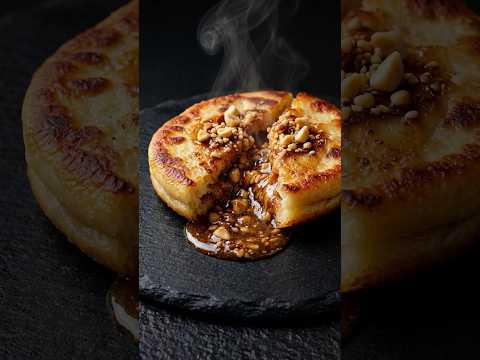
Inside a warm cinnamon hotteok
Short · Watch on YouTube